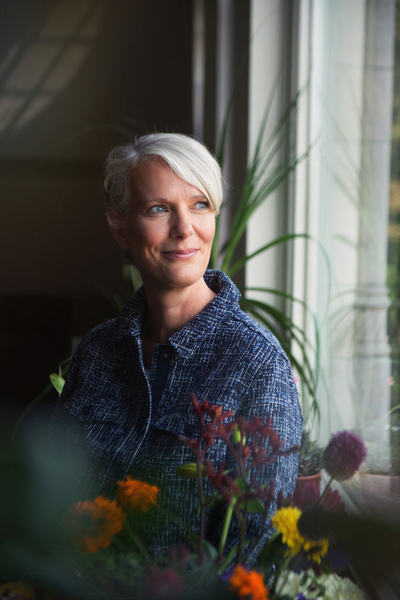

In the world of co-determination, the Works Council (OR) of HasKoning Nederland BV stands out as an example of effective, inclusive representation.
About Co-Determination in Dialogue
Co-Determination in Dialogue regularly interviews organizations and people who stand out for their commitment and impact on co-determination. These are sometimes organizations that already work with our solution and other times not. Co-Determination in Dialogue is the unique online consultation for groups of 10 to 10,000s for a well-founded advice, consent, or initiative. Employees build on each other’s answers to your questions and give their scores for support, thereby increasing and measuring support. They have privacy and participate at their own time, from their own natural work environment. This increases participation by 30-50% and 50% higher reliability. This is fundamental for effective dialogue with the management and supported decisions.
What Does HasKoning Do and How Does
Co-Determination Work?
HasKoning Nederland BV is a project organization with a robust OR structure of 19 members, carefully distributed across different groups such as business lines and corporate groups. This OR optimally represents its constituency through regular consultations with the management, CEO, HR directors, and the Supervisory Board (RvC) and Board of Directors (RvB). Twice a year, a joint consultation takes place in accordance with Article 24 of the WOR, with full attendance from the RvB and representation from the RvC. In addition, we have discussions six times a year with the CEO, the Netherlands director, the Netherlands HR director, and the Global HR director.
The Setup of Our Committees
The OR structures its work through specialized committees on topics such as terms of employment, HR policy, ICT, housing, occupational health and safety, pensions, strategy & innovation, and business-specific lines. “We have committees at the topic level, for example terms of employment and HR policy. All questions that come in about that are also directed to that committee,” says Nancy Nonkes, chair of the OR. In addition, there is a flexible taskforce for ad-hoc issues, such as reorganizations. This allows the OR to respond quickly and address current events and fulfill its role.
Open Leadership and Consultation
We ask about leadership, because it can have a reinforcing but also disruptive influence on the pleasure and success of a Works Council. How is it at HasKoning? Is leadership open to dialogue and how does leadership view the importance of the constituency? “Management at HasKoning is open to broad input,” Nancy indicates. That is valuable because it makes your relationship constructive and open to good mutual dialogue. They challenge the OR: “Is this widely supported within the organization? Or have you heard this from just a few people?” Tools for our consultations - Co-Determination in Dialogue - help in consulting employees on all kinds of topics, anonymously and on a large scale. This allows them to speak freely and reach everyone. They also learn from each other. “Through the two rounds - instead of a regular survey with one round - with dialogic consultation, you pick up where there is support and where there isn’t,” says Nancy.
This substantiation is important, because if you only collect a lot of open answers like with a survey, as an OR you don’t know what is most important in the eyes of the employees. You can’t figure that out yourself. Employees score each other’s opinions without hesitation due to anonymity. So, they can freely indicate that they completely disagree with others’ opinions. They also give scores to indicate that they still agree with other opinions they hadn’t thought of themselves.
What Do You Ask? What Do Employees
Say?
The HasKoning OR pays extra attention to careful question formulation in dialogic consultation, for example for themes like the new strategy. A good question, well-defined, is the basis for good dialogue, where employees engage with each other’s opinions. It has even proven valuable to show the management literal opinions of what is said and supported. This way, you learn exactly what they say. We think it’s great when leadership in such situations can also recognize what has been said. This way, they and we also know that they already keep their eyes and ears open quite well.
Other Perspectives
The OR also engages various experts. People who know a lot about a topic, such as pensions or governance. Then there is a seat available so we can inform ourselves well. We do this not only through online consultations with employees, as described in the WOR, Article 17, paragraph 1, but also with others from outside the OR. We also involve line managers on occasions, such as a new appraisal system, to understand well how they see it.
Hybrid Consultation
As an OR, we also want to be visibly non-virtual and go to teams and departments ourselves. We are soon holding drop-in sessions, where we especially want to invite everyone from such a department to tell what is going on and important. This way we come prepared and employees - even if they can’t make it at that moment or can but don’t want to say something - know that we listen to them and address what matters. According to them.
Then follows the feedback: “This is what we are going to do with it, based on what we learned from the consultation and the drop-in session.” This increases turnout and trust, especially for sensitive topics like safety or new appraisal systems.
At such a drop-in session, Nancy explains, it is more attractive for people to come if we as OR can say “we will address the questions and input you already shared in the online dialogue beforehand, so come especially.” We want to lure people extra to the sessions without the pressure that you have to speak there and we only ask questions. We add to Nancy that 50-80% of people don’t like speaking in groups. Online they can do that beforehand, so that at such a session you are well visible and can give a lot back to them.
Privacy
To continue on that. People find all kinds of topics exciting anyway. Safety is one of them. But a new appraisal system too. Then it’s much more attractive to give your suggestions if you get privacy to express your opinion. This also gives them the time and peace to think carefully about what they want to say.
Strong Team Dynamics
The current OR, largely new but very committed, is characterized by a strong sense of responsibility and mutual support in a busy project environment. “You never know when your projects catch fire and need someone else. Then there is always someone willing to take over your tasks,” Nancy describes. She experiences and sees this outside the OR too, in the organization’s culture. We are all solid on the content, but we are very good at keeping the relationship in view. So another perspective, or even a tough discussion, is fine and healthy, but we share the higher goal and keep it in sight. “That really is in the culture. In that respect, it fits well with dialogue, where you - sometimes toughly - learn and are open to how someone else sees it differently than you.”
HasKoning won the Golden Triangle trophy in 2020/2021 for robust consultation in the OR-RvB-RvC triangle. The Golden Triangle trophy, also called the Triangle 3D Trophy, is an annual award from the Alliance for Co-Determination and Governance (AMG). This trophy rewards organizations with robust consultation in the governance triangle: co-determination (OR), management/board, and supervision (RvC/RvT). The focus is on structural, formal, and informal consultation that leads to strategic decision-making with results on sustainability, diversity, and corporate social responsibility.
This approach not only makes the works council but also HasKoning an attractive employer where dialogue is central. With engaged employees who are heard and seen and contribute to a stronger organization.